Clinical leadership
Director’s message
Good eye care begins with understanding what matters to the person behind the test results.

A patient-centred direction
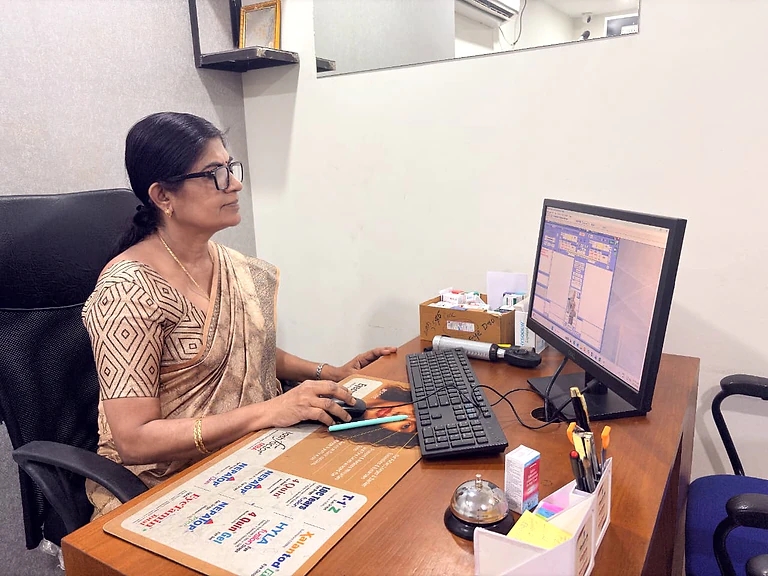
Dr. Asa O.A serves as Director and Chief Ophthalmologist of Amrutha Eye Hospital. This page describes the principles associated with that leadership role in third-person editorial language; it does not present invented quotations or personal claims on her behalf.
The hospital’s direction begins with the individual patient. Test results are important, but they make sense only alongside symptoms, health history, daily responsibilities and personal priorities. A thoughtful consultation gives patients time to describe what has changed and helps the clinical team explain what the examination can and cannot establish.
Care rooted in Thrissur since 1996
Amrutha Eye Hospital was established in 1996 and has continued to serve patients and families in and around Thrissur. The network now includes Mannuthy, Vadakkencherry, Cheroor and Puthur. Those locations create more ways to begin a conversation about eye care while the team coordinates appointments according to the reason for the visit.
A multi-location network also requires careful communication. Patients should be told which branch to attend, when to arrive, what records to bring and whether preparation may be needed. Because doctor availability, services and hours can change, the hospital asks patients to confirm these details before travelling.
Clinical judgement before technology
Modern measurements and images can add valuable detail, but technology supports clinical judgement rather than replacing it. The choice of test should follow a clinical question. Results then need to be interpreted with the examination and explained in language a patient and family can understand.
This approach avoids treating a scan, pressure reading or spectacle number as the whole story. It also makes room to discuss uncertainty, alternatives and the likely consequences of waiting or proceeding. Where review is appropriate, the patient should understand why it matters and what change should prompt earlier contact.
Communication and shared decisions
Respectful care means introducing the plan, seeking consent and giving patients an opportunity to ask questions. Before treatment, patients should receive an understandable explanation of the expected purpose, important benefits and risks, reasonable alternatives and practical recovery needs. They may ask for clarification, involve a trusted family member or seek a second opinion.
Good explanations should be usable after the conversation ends. A patient may want the assessment written down with medicine instructions and the expected review interval. Asking the patient to describe the plan back in their own words can reveal gaps before they leave.
Privacy is part of the same commitment. Conversations, records and images should be handled with care, and only information needed for treatment or administration should be shared through appropriate routes. Website forms are intended for contact and scheduling details rather than sensitive medical histories.
A hospital that keeps learning
Clinical leadership includes attention to care pathways, infection control, documentation, patient feedback and follow-through. Reviewing how the system works helps teams identify where instructions are unclear, handovers need strengthening or access can be improved.
Learning also depends on reliable everyday habits: recording the plan, checking that important instructions were understood and making responsibility for follow-up clear. When care moves between locations or clinicians, accurate information should move with it through the proper clinical channels. These practices are less visible than a new device, but they are central to continuity and patient confidence.
Patients contribute to that learning when they ask questions or raise concerns. Feedback should be received respectfully and should not affect a person’s care. The aim is not to promise perfection; it is to make responsibilities visible, respond constructively and keep the next step understandable.
Preparing for a visit
Patients can support a focused consultation by bringing current spectacles, a medicine and allergy list, previous eye reports and a brief symptom timeline. Some examinations require dilation, which can temporarily blur near vision and increase light sensitivity. Sunglasses and a companion or alternative transport may be helpful when dilation is expected.
To arrange care, call +91 90618 58643 or send an appointment request. The team will confirm the branch, date and time. Sudden vision loss, severe pain, injury, chemical exposure or a new curtain-like shadow should receive prompt professional advice rather than wait for an online response.